
Hannah Dale
Otsego Resident

“I am a 29-year-old cancer survivor. I never expected this to be part of my introduction. I would love for my introduction to just be that I’m a mom.”
I grew up in Bath, Michigan. We previously lived in Wayland and Holland, and we moved to Otsego in 2020. When we were house hunting, we knew about the paper mill and that there were some environmental concerns, but we wrongly assumed that we were safe. We figured that, with such a history, safety precautions would have been established to keep the community safe.
In hindsight, we wish we had looked a lot further into the history of this area. I did not start doing my own research until I was sitting in the chemo chair, and I learned about Mary Zack’s story. It really resonated with me since I also had ovarian cancer.
“Her story gave me a sinking feeling: was this something I could have avoided?”
My daughter was born in April, and my pain started in June. My symptoms included severe stabbing abdominal pain that came in waves. My PCP thought it was probably something related to my recent childbirth or possibly appendicitis. I followed my PCP’s advice for "watchful waiting," but the pain grew worse. Months went by before my PCP agreed to order an ultrasound; however, she only agreed to image my abdomen with a focus on the appendix, even though my appendix labs were normal. She declined to order pelvic imaging at that time. My pain grew worse, and by August I had developed a large palpable mass extruding from my lower left abdomen region. My stomach was going down from having a baby, so I was losing weight, but looking bigger. I expressed this to my PCP over the phone but still, she would not order further imaging unless I came back for another office appointment. The soonest she could see me was three weeks later. And the pain? It kept growing.
“I work in healthcare, and I love what I do, but blindly trusting the system does not work. The lack of urgency expressed by my PCP blew my mind.”
Two days after I finally got a pelvic ultrasound, a CT scan was ordered—another two weeks to wait. However, two days after I scheduled that appointment for that scan, the pain became unbearable, and I drove myself to the ER. A CT scan was ordered immediately in the ER, the results: “large lobulated mass, with cystic and solid components, highly concerning for ovarian cancer.” My life would never be the same after reading those words.
I didn’t have a choice but to work through my diagnosis, treatment, and recovery. I had already exhausted my FMLA for maternity leave. My first appointment with the West Michigan Cancer Center was a week and a half after my trip to the ER. That was a Wednesday. My surgery was scheduled for Friday. I was finally receiving the care and urgency that my situation necessitated.
Unfortunately, the day before my surgery was scheduled, I began experiencing searing pain, radiating to my shoulders. I had recently given birth, but that didn’t touch this level of pain. My ovary and the cancerous tumor had grown so large that it ruptured. My body had begun the process of entering sepsis. The nurses in the OR were concerned that I could not go into surgery due to my medical status. I had a raging temperature, and a heart rate of 160+. The surgeons didn’t know the mass had ruptured until they opened me up.
“If my PCP had listened to my concerns and ordered a pelvic ultrasound in June, I could have avoided horrible pain, rupture of a cancerous organ, and major exploratory open abdominal surgery.”
I try not to dwell on what could have been, but truthfully, I am still angry. Pathology found that I had an immature teratoma of my left ovary. It was high grade and it was composed of embryonal carcinoma and germ cell with yolk sac differentiation. The rupture unfortunately increased my risk of recurrence in an already aggressive malignancy.
Since my diagnosis, I’ve been at a 70 or 80 percent stress level at all times. I realize how much pain and fear cancer survivors have to carry. I don’t know what all of that chronic stress will do to my body; I just want to be a good mom. I don’t want to pass down generational trauma to my child. I just want to live. I have since completed the grueling process of chemotherapy, multiple hospitalizations, and pulmonary complications from my treatment. I am now considered in "surveillance" as I had a cancer with a high probability of reoccurrence, especially in these first two years. I still get anxiety every time I get my tumor markers drawn or have another scan.
Someone I know who works at EGLE told me that since I was diagnosed, they had been thinking about the poor water quality in this area.
We may never have the answers of correlation or causation, but if there is a chance health issues in the area are related to environmental issues, then how can we, as a community, get ahead of it?
“As a provider in the Plainwell-Otsego area, you must be aware of the higher incidences of certain types of cancer in your community—there is no excuse.”
I try not to go down that path of “If I had known earlier, I might have had a laparoscopic scar and might have never needed chemo. If this was discovered as a tiny tumor, instead of something the size of a football. If it hadn’t popped, I would have been able to have breastfed.” I feel like I was just getting the hang of it, and then all of this happened. But this is what my life looks like now, and I need to keep it together for my daughter.
What does justice for Otsego look like?
I think it looks like answers and access to information, which goes along with awareness. But I feel like there's so much information out there; we just don't know if it's quality information. We don't know if it's valid. We don't know necessarily who's putting it out there, what company.
I think we deserve as close to a non-biased set of information to help us make good choices for our family's sake. And also having access to healthcare providers who are aware so that more people don't get made to think that they're just having normal aches and pains when, in fact, it is not. Everyone needs information, the healthcare providers need the information, the families need the information. Whether it's correlation or causation, at least we will have a fighting chance to be able to survive these things and have a life after the fact.
Because yeah, cancer sucks. Yeah, chronic health issues suck. But it sucks even worse when things go so long being unaddressed because we lack access to the right information. How can we as a community get ahead of it? If it is community-wide, what support should the community be getting to take a proactive approach? What does that look like? Because not everyone has the means to just go and buy a reverse osmosis system. What small things can we do?
What does “Justice for Otsego” mean?
Related Stories
-
I lived at Ground Zero. No one lived closer to those pits and that contamination than I did, and there were so many different exposures in my life. Who's to say what was going to become of it?
-
People say, “No one knew.” But I believe they did. These companies employed chemists, engineers, brilliant people with PhDs. They knew. And now, multiple generations are paying the price.
-
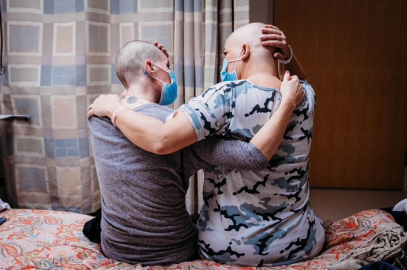
Our biggest mistake is thinking it’s not going to happen to us and always thinking we’ll have the time.