
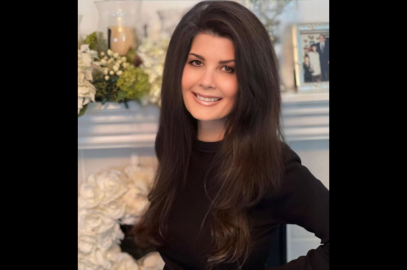
Kelly Busha
Former Otsego Resident

I wasn’t born in Otsego. In fact, for most of my childhood, we were always moving. My dad had been a marine and fought in Vietnam, and even after leaving the military, that constant uprooted lifestyle stuck. My parents worked as a husband-and-wife team for a company that moved us every few months. By the time I was eight, I’d lived in far more places than most people do in a lifetime.
When I was nine, my parents decided enough was enough. They were tired of pulling my brother and me out of school every three months. So, they moved us to Otsego, Michigan—the closest thing we had to roots because my mom grew up there. She had been adopted into a family in Otsego as an infant, so we never had much medical history on her side, which I now realize matters more than I ever imagined.
Coming from California, Otsego was a shock. I’d been raised in a laid-back, open-minded environment, and suddenly I was in a very small town where everyone knew each other and primarily seemed all the same. It was hard to fit in. But I tried—I joined cheerleading, track, choir, band, drama, student council, National Honor Society. I was at school many days from 7 a.m. to 10 p.m., doing everything I could to achieve and belong.
Still, something felt off. When I lived in California, I was healthy. Hardly ever sick. But in Otsego, I started getting colds all the time. I was constantly tired, missing a lot of school. At first, I blamed the weather, the lack of sunshine. But deep down, I wondered if it was something else.
“My parents told me not to drink the water. We always had bottled water, even though that wasn’t common back then. They warned me never to swim in the Kalamazoo River, even though all the other kids did.”
One day, a boy pushed me in, and when I climbed out, my white canvas shoes had turned yellow. My parents threw them away immediately. We didn’t have money to waste on shoes, so that moment has always stuck with me.
And then there was the smell. If you’ve ever lived in Otsego, you know what I mean—the paper mills. That sour, acidic, burning-leaves smell that clung to everything. I remember asking my parents why it smelled like that. We’d lived in Los Angeles, where the smog was so thick you couldn’t see across the playground, but it didn’t smell. Otsego did.
I graduated in 1998 and left almost immediately. I thought I was leaving all the negative aspects of my hometown behind. But the truth is, Otsego never really left me.
For years, I brushed off my health issues. I was diagnosed with hypothyroidism at 18 and early-onset arthritis in my hips at 19. Later came chronic fatigue, migraines, bursitis, skin cancer in my early 20s—even though I practically bathe in sunscreen. I continued to struggle with immune system issues, though no doctor or specialist could pinpoint why. After having kids, I unknowingly developed severe endometriosis and adenomyosis. I bled so heavily that I became anemic. Doctors dismissed me for years, telling me it was normal after childbirth, normal with hormonal changes as women age. It wasn’t.
In 2024, I finally got a few answers: severe endometriosis and adenomyosis that would require a hysterectomy. A month later, I was diagnosed with DCIS—breast cancer in the ducts. I’m a hospice and oncology nurse, so I knew what that meant. I was lucky; it was early. I chose a radical double mastectomy and reconstruction. I was fortunate to not need chemo or radiation. Surgery and early diagnosis saved me. But the mental toll and survivor's guilt were enormous. Panic attacks, anxiety, depression, severe ADHD diagnosis at 45. I’ve spent the past year recovering—not just physically, but mentally, spiritually, and emotionally.
When I look back now, I see the pattern. My mom died suddenly at 49 from a blood clot no one could explain. My dad had bladder cancer and skin cancer before dying of a stroke. And me? Thyroid disease, skin cancer, breast cancer, endometriosis, osteoarthritis in my hands, hips, shoulders, and even my jaw.
I’ve read the reports. I’ve seen the data Mary Zack collected before she passed—a classmate of mine who devoted her final years to uncovering the truth about Otsego.
“The cancer clusters, the rare diagnoses, the families with multiple generations sick at once. It’s undeniable. And yet, the town is divided.”
Some say, “Yes, this is real.” Others insist, “People just get cancer.” That denial runs deep, fueled by loyalty and fear.
I think about the factories—Menasha, RockTenn, Parker Hannifin, the meat-packing plant. For such a small town, there were so many. I think people fail to properly account for how very small Otsego is. Four thousand people and all those production plants. With a lot of production comes a lot of waste.
I remember running on dirt roads in high school, kicking up dust that smelled strange. Years later, I learned chemicals were dumped there. I remember hearing big trucks early in the morning, never thinking twice until I saw those old typewritten reports detailing what was buried in our soil.
“People say, “No one knew.” But I believe they did. These companies employed chemists, engineers, brilliant people with PhDs. They knew. And now, multiple generations are paying the price.”
I don’t go back to Otsego much. My mom is buried there, and my best friend’s parents still live there, so maybe once every five years. But I don’t have a relationship with the town itself anymore. It feels like a bad boyfriend—something I invested in, tried to make work, but ultimately had to leave for my own well-being.
Still, I can’t stop thinking about the people of Otsego. Most were kind and hard working. My class had 150 students. At least ten are gone—most from cancer. Some from very rare cancers and most very young. As a medical professional, I can assure you, this is not normal. These aren’t statistics. They’re faces I knew, voices I remember.
What does justice for Otsego look like? For me, it starts with validation.
“People deserve to hear the truth: this happened to you. It was wrong. The companies responsible should admit it. Clean up the community. Make it safe for families who want to stay.”
There’s no price tag for a life, no way to undo the pain. But honesty matters.
I’ll always have gratitude for the friendships I made in Otsego. My three best girlfriends that I met in school are still my best friends today. But the town itself? For me personally, it just represents pain, loss, and missed potential. I wish more for Otsego. The community deserves more. I wish for health, happiness, healing, and a future where kids can drink from a hose without fear, where rivers don’t turn shoes yellow, and where no one has to wonder if their hometown is harming them.
Because deep down, I always knew something was wrong. And now, I know I was right.
What does “Justice for Otsego” mean?
Related Stories
-

I want it cleaned up. And I want people involved, especially those who might have acted nefariously, to be obligated to give testimony. Because your companies could be liable.
-
I lived at Ground Zero. No one lived closer to those pits and that contamination than I did, and there were so many different exposures in my life. Who's to say what was going to become of it?
-
It doesn't take very much for a little bit to become a lot, especially when you have chemicals that don't mix with water.