
Rosemary Parker
Otsego Resident
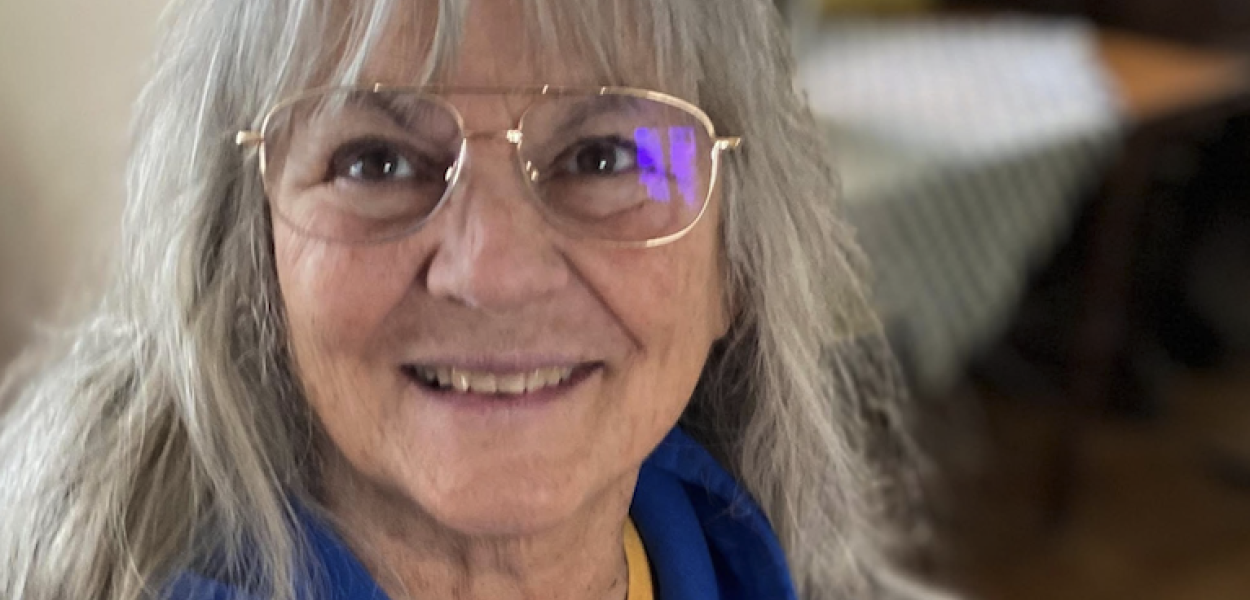
Our family moved to Otsego in 1980. We live three blocks from the Kalamazoo River and five blocks from Menasha, now the Otsego Paper mill.
“I remember when we moved here the town was called "Otstinko" because of the paper mills and the meat packing plant in Plainwell; the smell would blow our way depending on the weather.”
I remember the dust treatments for the roads, and my kids played with farm families whose nearby fields were likely fertilized with black liquor. We drank unfiltered city water.
My husband is a Vietnam veteran, and receives partial disability for his likely exposure to Agent Orange. In 1973, during Michigan’s PBB disaster, I was exposed to poly brominated biphenyls. I remember participating in a study and having my breastmilk tested by the state health department. They found PBB in my breastmilk, but the researchers’ advice was to keep breastfeeding because no one knew what the impacts of PBB on health were. And the alternative was formula.
As a student at Michigan State University I worked as a lab tech in Dairy Nutrition. You know the book “Poisoning of Michigan,” about the PBB disaster? Our lab handled samples. We also studied other cases of contaminated dairy cattle, searching for ways to safely decontaminate them. I thought I wanted to be a scientist, but working in the lab taught me this kind of science is often repetitive. So, I moved into journalism. I became an Allegan County reporter for the Kalamazoo Gazette and the Grand Rapids Press, and my beat was Allegan County. I also founded a weekly newspaper, the Penasee Press, with my husband and another couple.
Between 1976 and 1984 I had five children, all born seemingly healthy. But during their teens and 20s, health issues emerged. Three of my children have Hashimoto thyroiditis, an autoimmune disorder. Two have had persistent elevated liver enzymes and have undergone liver biopsies with nebulous diagnoses — fatty liver, possible hemochromatosis, narrow bile ducts and multiple stones, cholestasis of pregnancy, a miscarriage.
“All my children look healthy in spite of life-altering health conditions. Our kids aren’t visibly ill, but many of their classmates are. I think of all the people who’ve battled cancer and rare diseases, many of whom have died too young. Did living here contribute to their issues?”
I’ve asked myself, “What the hell is going on here?”
I don’t mix causation with correlation, but I do wonder why we aren’t more aggressively looking for answers.
Consider, for instance, the Creutzfeldt-Jakob disease clusters near us. It’s a very, very rare disease. I looked up a study about the clusters, and the journal article literally ends with the advice of researchers that “these two clusters, along with additional cases reported by our patients' families, warrant urgent investigation.” Where’s the investigation?
In my beat as a journalist I followed stories such as the A1 Waste Disposal spills and illegal dump sites, and I attended and reported on city commission and county commission meetings. I have a degree in agricultural communication, and a lot of access, but I also had a lot of other things on my plate at work. I wasn’t only reporting on environmental issues. Still, when I went to the State of Michigan library website, when I filtered for my own stories with the tag “PCB,” I retrieved more than 300 stories. So, I was covering environmental issues consistently throughout my career. Jeff Alexander and Bill Krasean were Kalamazoo Gazette environmental reporters in my day, and they’ve done a lot more reporting than I have on these issues. So, there was an attempt to shine a light on these concerns. As a journalist, I’m aware that my knowledge is limited. I only know what’s been brought to my attention and what people want to tell me. That leaves a lot of questions still unanswered, even after all of these years.
If I were still an environmental reporter, I’d wonder:
- The former RockTenn site is supposedly going to be used for Section 8 housing soon. Has the land been remediated? What are they going to do to protect the kids that will live there?
- I have read that manufactured snow can be a source of exposure to hazardous chemicals. Given the proximity of Bittersweet Ski Resort to an illegal A1 Waste Disposal dump site, I’d be curious to know if the water used to manufacture snow there is routinely tested.
- What’s the story on the so-called Menasha landfill and contaminated groundwater there? Has it been added to the Superfund site? Have residents been informed if it has?
- But most of all I’d ask: Is anyone doing anything to gather health data about people who once lived here but have since moved away? Are they aware of the possible health issues they may face? What can be learned by connecting the dots of their health histories? Might patterns emerge that would help guide further study?
Thankfully, many environmental problems have been identified and are being remediated, but what about people who lived here before? Shouldn't someone try to track the health issues of people who have lived here to learn more about potential health threats?
I’ve heard of Otsego called an attractive nuisance. We have a beautiful town, but we know there has been soil and water contamination over the years, some of which is still being uncovered. My faith in the health department has eroded over the years. I respect Allegan County’s environmental health officers, and I know the health department is doing its best, but maybe they’re not asking the right questions.
“We dumped our waste, we threw it in the river, we spread it on the fields, we drank the water that was near dump sites and partied on contaminated river banks. We don’t know what that has done to us, or what it may bode for future generations.”
I feel like we’re all like the blind man and the elephant. We’re all reaching and asking and drawing conclusions, but we can’t see the whole picture.
Otsego is a beautiful city but we know its history of industrial contamination may leave some of us who lived here at risk. For me, justice for Otsego might include guidance about what medical screening tests we and our children should have that doctors unaware of that history might not suggest.
What does “Justice for Otsego” mean?
For me, justice for Otsego might include guidance about what medical screening tests we and our children should have that doctors unaware of our region's history of contamination might not otherwise suggest.
Gallery
Related Stories
-
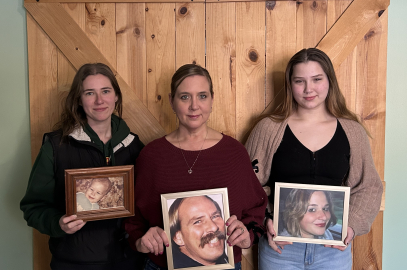
I had always known something environmentally was wrong, but I didn’t know what it was. There were way too many kids with autoimmune disorders and people with rare cancers.
-
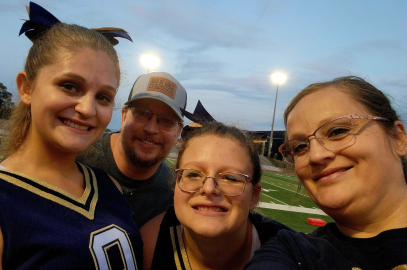
It doesn't sit right with me that my daughters are going through this. It's really hard to be so helpless. My daughter wants answers, and I don't have any.
-

Otsego is a blue-collar town, and we’re proud of that. We’re not just little puppies—we’re bulldogs. We need to be patriots of our own health, our own environment, our own future.