
Mary Zack
Founder of Justice for Otsego
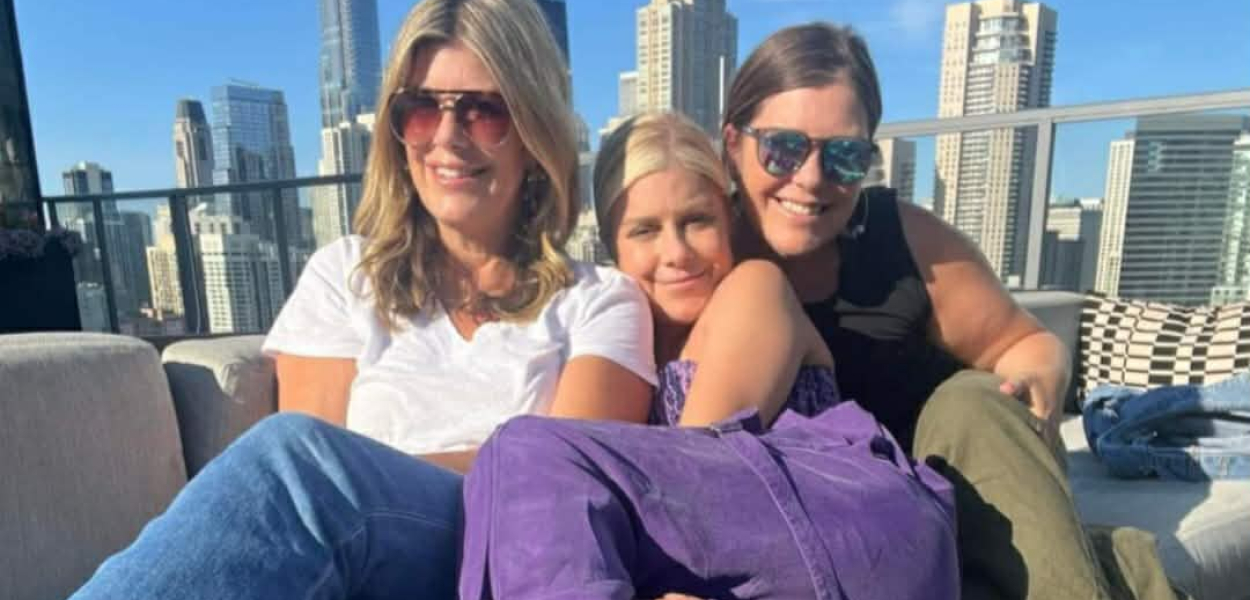
A note on Mary’s story: This story is based on a conversation between Mary and the Toxic Action Lab on May 14, 2024. It is with great sadness that we share Mary passed from her illness on March 1, 2025. It is an immense honor to be trusted to tell this story. Mary’s relentless inquiry, her incisive voice, and her ability to bring people together around a shared purpose are the foundation of this work; the Otsego Story Project simply would not exist without her.
I was 17 years old and living in Otsego when I was diagnosed with stage 4 ovarian cancer. I had zero family history and my gynecologic oncologist in Kalamazoo had never seen a patient so young. I ended up going to Northwestern for treatment. Thankfully, it was a germ cell tumor, which made it curable. I went through chemotherapy—a terrible experience—but I was cured. At the time, I just thought it was a fluke.
Fast forward: I went to Michigan State and thrived. But while I was there, my middle sister was diagnosed with breast cancer at 32 and had a double mastectomy. My eldest sister also battled breast cancer. Then, in 2018, my middle sister was diagnosed with cancer again, this time with melanoma.
That's when I first came across an article about the Kalamazoo River Superfund site and the PCBs. I didn't know anything about the environment back then; I never thought about it. The craziest part was when I started reading and realized the Kalamazoo River became a Superfund site in the ’90s, right when I was in high school—and I had no idea! It would have been nice to know.
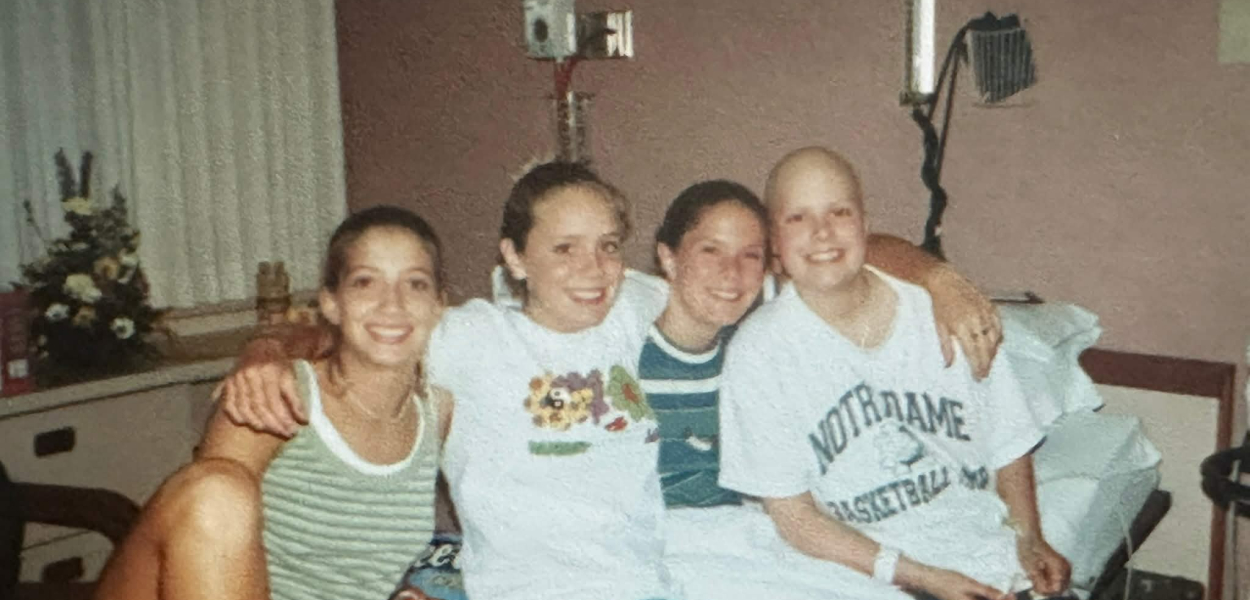
“I mean, we knew the river was dirty, but I didn't know it was full of cancer-causing chemicals.”
That’s when I started asking myself, “What’s going on here?” My sisters had battled multiple cancers, and by 2018, I had already lost friends to the disease. At that time, I could probably name six classmates who died from cancers like Ewing sarcoma of the chest wall, osteosarcoma, and ovarian cancer. I went to a high school with only 600 kids in a town of 4,000 people. I went to Michigan State, and my friends there were from places like Plymouth, Canton, Bloomfield Hills, and Novi. I'd ask them, “How many people do you know who have died from cancer?” A lot of them couldn't even think of one. To this day, I can name at least 22. Currently, I know seven of us fighting different cancers, from cutaneous T-cell lymphoma (CTCL) to three with acute myeloid leukemia (AML). And it’s not just cancer; it’s autoimmune disorders like scleroderma, where your organs literally turn to stone.
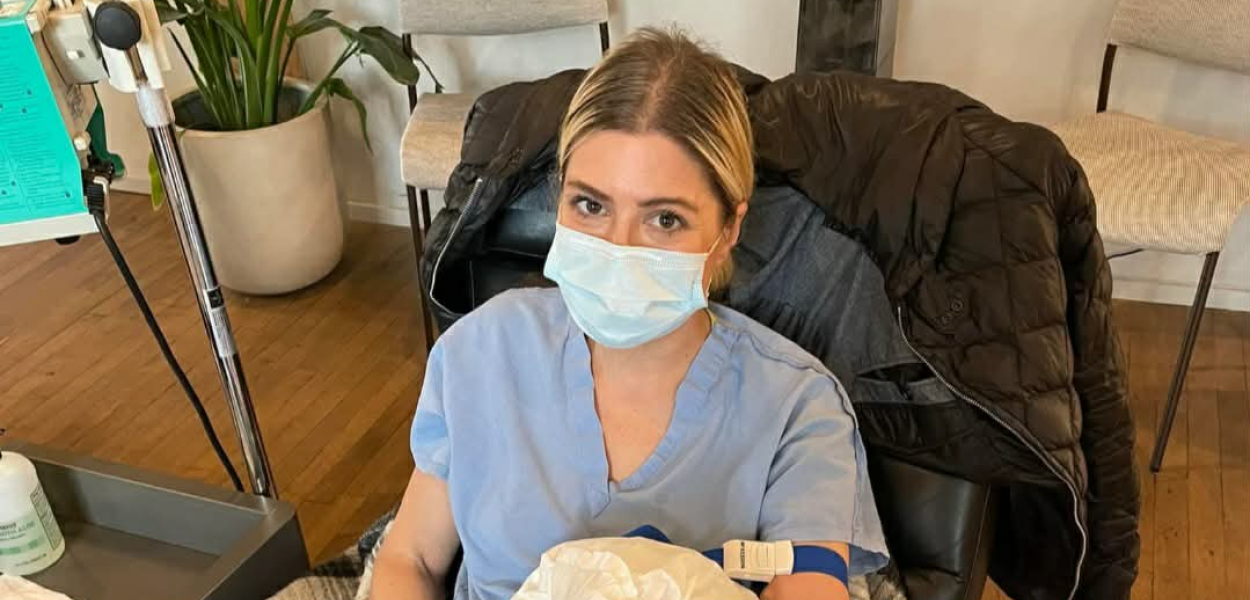
Right now, I have stage 4 lung cancer. I’m a non-smoker and a marathon runner—I’ve run four of them. My type of lung cancer has no standard treatment available. So far, I have failed two different chemotherapies and one clinical trial. Currently, I’m in a new trial with 432 other patients at Memorial Sloan Kettering in New York City, where I fly once a week to try to save my life. In April 2022, they gave me two years to live. I’ve surpassed that, which I’m happy about. I'm hoping I'm going to be a miracle.
When I first learned about the river back in 2018, I didn’t know what to do with the information. I have a communications and journalism background, and I’m a big researcher, but I was at a loss. Being from my generation, the first person I thought of was Erin Brockovich. I found her email, sent her a message, and she wrote back within 24 hours! Erin and I still talk about that to this day because, as she says, “Mary, I get thousands of emails and I never respond.” The fact that she chose me to be on her podcast was incredible. That was only six weeks into my investigation, and we know so much more now. She even flew her law firm out to Otsego. It’s still very bizarre to me that the news media didn’t cover it.
Erin directed me to her website, where I got the idea for a community health survey. I went on a Facebook page called Vanished Otsego and posted, “Class of 1999 here. I’ve had cancer, I spoke with Erin Brockovich, do you guys think there’s a problem?” The responses blew out of control. So, I started an anonymous health survey, and now I have over a thousand submissions.
“At first, there was some doubt, with people saying that everyone gets cancer. But I said, 'No, everybody does not get cancer, and they definitely don’t get it in their teens, 20s, and 30s.'”
The health surveys were unbelievable: teratomas, germ cell tumors, sarcomas, four cases of Ewing sarcoma of the chest wall. We have the rarest cancers in the world in my health surveys. Many people have had two, three, or four types of cancer in their lifetimes.
Once I had a hundred surveys, I reached out to Dr. Mark Johnson, the head of the Agency for Toxic Substances and Disease Registry (ATSDR) at the CDC. He happened to be in Chicago, where I've been a medical device rep for 20 years. I called him on the phone, and he picked up. I told him, “I grew up on a Superfund site, I have cancer, everybody has cancer, and I have a health survey.” And he said, “Oh, can you come meet with me tomorrow?” Which, I’ve been told, is a little bit unusual.
I told him that people were being blown away by what I'd done with my health survey. I asked people: What's your age? What was your age at diagnosis? What's your diagnosis? Do you have a family history of the diagnosis? Do you have other family members who are ill? What year did you graduate? I included that last question because I wanted to be able to pull up data by graduating class. For instance, in my graduating class alone, there are eight of us who have had hysterectomies before the age of 30—and I only have 130 people in my class. That is not okay. It's not normal.
Dr. Johnson asked me, “Mary, what are your plans?” This is two weeks into my research, right? And I said, “Well, I've decided to host my first town hall meeting because I want to get people together. I want to see if people really think this is real.” He said, “Okay, Mary. We'll be there in five days.” Five days later, it was scheduled. He told me the EPA would be there, the Michigan Department of Health would be there, the Allegan County Department of Health would be there, and he would be there from the CDC. Then he asked if I could come back tomorrow so we could get together and discuss what the meeting was going to be about.
I told him yes because I was so passionate about this. This had become my life. Then, I did an Erin Brockovich–based move. I basically printed out pictures from my yearbook, and I highlighted the faces of my dead classmates. They couldn't believe it. At first, they were telling me how they were going to talk about how they were working on the river cleanup and all of these things.
“I told them, 'No, I want this to be our meeting. I want us to be able to tell our stories.'”
Our very first town hall meeting was standing-room only and four hours long. I didn't even know the first person I picked to stand up to tell their story. He said his daughter was 32 and got breast cancer. It went to her spinal cord; it's called leptomeningeal disease. She died within four months, and he had just buried her. He had her obituary in this Shoppers Guide. People who had kids with brain tumors were also standing up. Since then, I’ve done five town hall meetings.
I became obsessed after that first meeting and realized something was really wrong. It can't just be the river. I didn't understand how there could be cancer-causing chemicals in the river and yet no one had done a human health study. I later learned that our city wells are only feet from the river, in a floodplain. They tried to explain to me that the molecular weight of PCBs is so heavy they're not going to migrate out of the soil at the bottom of the river.
“I tried to explain to them that the river has a history.”
Everybody has discharge permits into the river; they're discharging solvents and surfactants into the river. Not only that, but they’re also using paper mill sludge on agricultural fields. It’s important to know that the byproduct of papermaking is pulp sludge. Globally, if it's treated properly, they give it to farmers as fertilizer. But here, they spread paper mill sludge on 47 farms for two years. I’m talking many million tons of this sludge. I am not exaggerating. Now we know that sludge contained PFAS.
In the late ‘90s, the Department of Natural Resources was testing wildlife, mostly deer and fish, and they found PCBs in the river. So, they were going up and down the river requesting information from the paper mills because they suspected they were the source of the pollution. Every paper mill had to supply every detail of their business—from the first time they laid a brick, to ownership changes, to workers’ actions, everything.
Among the 10,000 pages of EPA Superfund site paperwork, I came across an internal memo from the Menasha Paper Mill in my hometown. It stated there was a rumor going around the mill that A-1 Disposal, who was the toxic waste materials disposal handler, was mixing chemical waste from Pfizer, Ford Motor Company, General Motors, Parker Hannifin, and about 12 different companies in with the sludge, instead of paying to have it disposed of in a landfill. If that was the case, God knows what's in it, because the rumor was that they were mixing chemical waste with it.
The EPA also found an illegal landfill operated by A-1 Disposal in Otsego—a giant hole in the ground with 55-gallon drums of waste. They did get indicted for that landfill. A-1 Disposal also sold this “genius” program called the road binder program to all of Allegan County, where they sold waste oil—used oil from the factories—to spray dirt roads as dust control. There are rumors that they were mixing chemical waste into the road binder as well.
People reached out to me to share their stories. A woman, for instance, messaged me and said: “Mary, I was married back in the ‘70s when I was 19 to a guy who worked for A-1 Disposal. Being young, I wanted to see what he did for a living, so I rode with him. We got in a big tanker truck, rode down dirt roads, and he just put a hose outside and sprayed. The next day they asked him to clean out the tanker truck, and he had to go to the hospital because he had chemical burns.”
I tried to show people it's like organized crime, involving multiple generations of families. I've had friends, classmates, who live there and own farms, who have threatened me. People who know what's going on here saying, “Mary, you need to let it go.” But I won’t. What is so infuriating to me is that we just need one whistleblower. Just one to say, “This is what happened.”
“There are people who know things and they're silent, and they're literally watching their neighbors die.”
The state came in to test for contamination because at these 47 farms that accepted sludge, people have private wells. The contamination on land can contaminate their well water. The state tested something like 36 private wells. They said, “Since you guys don't trust us because of Flint, we used two independent labs.” When the results came back, 20 wells went to one lab and tested positive for dioxin—also known as Agent Orange. The other 20 went to a different lab and tested negative for everything. It was “perfectly fine.” I thought, “How can this be? They had the same sludge.”
Then the state came back and said, “We investigated the lab that had the dioxin results, and they used contaminated containers.” So, they retested, sent them to the other lab, and everything was fine. They're telling us that the levels of dioxin are at safe levels, but we're all dying. I am telling you, we lost six or seven classmates last year alone. All of our health problems are directly correlated to a lot of Agent Orange and dioxin-type cancers. A lot of people are having birth defects. Babies born with missing body parts. Somebody just had a baby born with one lung. It's just devastating. The amount of suffering is maddening.
“I've learned from Loyola University about something called “sacrifice zones”—places where the health and safety of a community are essentially traded away for industrial profit. These zones are almost always in rural and minority communities.”
I'm telling you, not only do we have that, but we have a lot of locally unwanted land use, or LULU. We have a lot of brownfields as well. Then they build something on a brownfield, and people don't ask questions. They say, “Oh, we got a brand-new library. Awesome!” Well, you didn't realize it was built on a contaminated site. One of Menasha’s old dumping acreages is now a company called Renewed Earth. They're selling soil to Home Depot.
Even prior to all of this disgusting mess, back in the early ‘70s, our city wells were in a different location right next to the paper mills. They had a bacteria issue in their process. But instead of stopping manufacturing—and losing money—to fix the bacteria, they just put all the wastewater in these unlined lagoons. This was in 1972, and those lagoons were uphill on a gradient from our city wells. Over time, the wastewater leached into our drinking water. So then, starting in 1974, they decided to add a bactericidal agent—one that's now banned—directly into the groundwater where the city drew its water at the time.
My parents were probably contaminated from that water back then. Eventually, they realized this bactericidal agent wasn't safe for drinking water, and that's when they finally moved the city wells. So that could be a root cause of all this, too, because my mom could have been contaminated early on.
“I don't know if they think this is just going to phase out, like over time the chemicals are just going to go away. But these are DNA-altering chemicals. My sisters and I have genetic mutations that are de novo, meaning they started with us. Where did they come from? Chemical exposure. The scariest part is that they're going to be passed down to the next generation, so this is going to be forever.”
We need to figure something out. People are frustrated. They ask, “We've already had five town hall meetings, what's going on?” I'm picking and choosing wisely what I share with people now because we've been let down so much. We feel like the case is closed. That's how we feel—like nothing is happening. It seems like they’re just saying, “You guys are fine.” That's why I've been trying to email all the major news media outlets. Since learning about sacrifice zones, I know this is such a big story. I want to get national coverage because I want to inspire other communities.
I think the guidelines for what is considered a “cancer cluster” need to be evaluated. I've been told the CDC won't do a health assessment because we're not a cancer cluster—because we don't all have the same type of cancer. In order for us to get a health assessment, we have to prove there's contamination. Well, I've proven there's contamination. They're saying it's not contaminated because it's under the legal limits. Well, then your legal limits need to change. Maybe it's safe now, and that's the hard part, because you don't know what it was in the past. But there are still PCBs in the river, there are still PFAS in the river, and there are still chlorinated solvents in the river.
Justice for Otsego, for me, would be seeing them provide reverse osmosis water filtration for everybody—in the city, too. I'm not just talking about the people out near the farmlands. Personally, I don't see any difference between us and Times Beach, Missouri. I think Otsego needs to be evacuated. That would be my ultimate goal. I know that's not going to happen, but we would like to be acknowledged, and we would like to have some sort of health assessment.
“People are suffering, and they are terrified for their kids.”
I talked to a therapist who said that even a trained trauma therapist wouldn't be able to handle what I’ve been through. For six years, I've been the person people are messaging on Facebook, saying, “Mary, my eight-year-old daughter is having an ovary removed,” or “Mary, my four-year-old has a brain tumor.”
But the messages aren’t all bad. Two women messaged me to say, “Mary, I just changed my degree to environmental sciences because of you.” I've had people message me saying, “I had a mass and they wouldn't give me a biopsy. Because of you, I pushed for it, and you saved my life because I had cancer.” So, I'm happy I've done that. I'm so thankful for my community because they think I'm a hero, but I feel like a failure because nothing's been done. I literally have laid everything out on a silver platter. I have the memo printed. I have the letter from my mayor printed. I have my health survey. I have all of these things, but just because we don't all have brain tumors, they say we're okay. They think we're too poor and too dumb or uneducated to figure stuff out. They never thought anybody would ever do anything. I figured it out. And they're still ignoring us because, oh, it's only a town of 4,000 people. That's how we feel.
What does “Justice for Otsego” mean?
Gallery
Related Stories
-
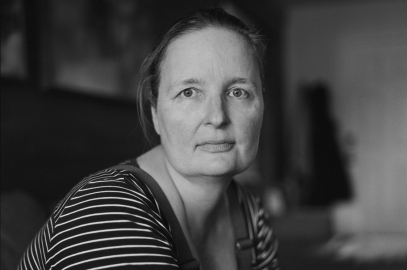
I had no idea at first that it may have anything to do with environmental exposure.
-
I lived at Ground Zero. No one lived closer to those pits and that contamination than I did, and there were so many different exposures in my life. Who's to say what was going to become of it?
-
Otsego is a blue-collar town, and we’re proud of that. We’re not just little puppies—we’re bulldogs. We need to be patriots of our own health, our own environment, our own future.