
Jennifer Card
Otsego Resident
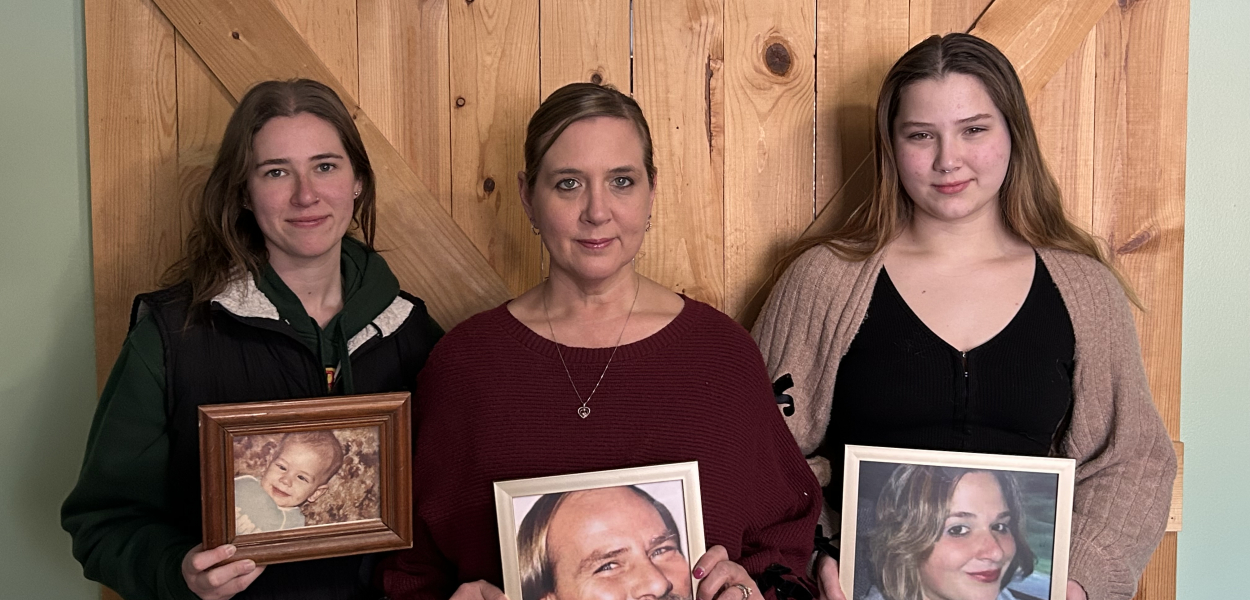
My name is Jennifer Card, and I’ve lived in both the Otsego and Plainwell areas for most of my life. I grew up near Lake Doster on a dirt country road where my father built our family home and I now live in Alamo Township. This is my home, my community, and the place where generations of my family have lived, worked, and raised their children.
My interest in Justice for Otsego is deeply personal. Both my family of origin and my own children have been profoundly affected by what I believe is a polluted environment. I have watched half of my birth family die from aggressive, rare, and devastating cancers. And now, as an adult, I am raising children with serious autoimmune and reproductive health conditions. I have spent years advocating for local families who have children with type 1 diabetes, and I have seen firsthand that my story is far from unique in this community.
A History of Loss
In 1982, my brother was born. When he was just three months old, he was diagnosed with an extremely rare and aggressive brain tumor—an atypical teratoid rhabdoid tumor. He underwent treatment at Bronson Hospital and Sloan Kettering in New York, he passed away at nine months old. I was six when he was born and seven when he died. My childhood memories revolve around his illness—first we were praying on my bed with my sisters and parents for God to heal him, next we were visiting Cressey Road Cemetery. My sisters’ and my job was to gather water from the old metal water pump and fill a milk jug to water my brother’s graveside flowers. That cemetery is where my father and sister now rest as well. It feels like a second home to me; I grew up going there.
Twenty-five years after losing my brother, my dad became suddenly and severely ill. The cancer was everywhere—his lungs, bones, intestines, and prostate. He turned yellow seemingly overnight. He was diagnosed on March 17, 2008, and we lost him one month later, on April 17—on the same date my brother died, 25 years apart.
Ten months later, my mother was diagnosed with cervical cancer and most recently, in 2024, with breast cancer. Thankfully, with treatment, she is now cancer free.
The most devastating loss came in 2022, when my sister was diagnosed with small cell carcinoma of the ovary, hypercalcemic type. This cancer is so rare there are only about 500 cases worldwide. She tested positive for the SMARCA4 gene mutation, which was not even identified until 2017. My brother’s tumor type is associated with this same mutation. My father likely carried it as well.
“But having a mutation is only part of the story. This type of cancer typically also requires an environmental trigger.”
My sister lived and worked her entire life in the Otsego/Plainwell area, including working at a local manufacturing plant. She left behind a nine-year-old daughter. Thankfully, my niece does not have the mutation—but she no longer has her mother.
My Children’s Health
My daughter Ella was diagnosed with the autoimmune disorder type 1 diabetes at age 12. Her immune system attacked the beta cells in her pancreas and took out her insulin production. Anyone familiar with type 1 knows: genetics alone does not cause it. There must be an environmental trigger. And when we looked around, so many of our children in the area had the exact same diagnosis.
Approximately 20 children in the Otsego school system had type 1 diabetes while she attended that small school. There are also multiple children at Plainwell school system with type 1 diabetes. That is far beyond typical prevalence.
Our school district has:
- A teacher who monitors multiple students’ Dexcom glucose readings on her phone
- Emergency snack bags purchased for every classroom in case of a lockdown
- A diabetes supply closet
- A full program for children with this autoimmune disorder
This is not normal. This is a response to an abnormal number of chronically ill children. And it’s not just type 1 diabetes—it’s polycystic ovary syndrome (PCOS), juvenile arthritis, a pattern of autoimmune and reproductive disorders and cancers in local kids.
My daughter Cora was diagnosed with PCOS two years ago. She is 25 years old and now must worry if she can have children. She was put on medication to help her manage the symptoms and her body’s reproductive ability.
I want to note that even with these challenges, my children have overcome, managed their symptoms, and are still excelling in life.
Discovering the Environmental Connection
It wasn’t until Mary Zack started digging that we learned what had been happening in our town:
- The city had been purchasing industrial binders to spread on roads
- Sludge from the wastewater plant had been given to farmers
- Contaminated sludge was spread onto fields where our food is grown
“I had always known something environmentally was wrong, but I didn’t know what it was. There were way too many kids with autoimmune disorders and people with rare cancers.”
Once I learned, everything clicked into place.
Now, I won’t buy produce from local roadside stands. I don’t know what’s in the soil. I buy my vegetables from Meijer because I want food that doesn’t come from contaminated farmland. I wish I had known sooner. I wish I had known when my kids were small.
What Justice for Otsego Looks Like to Me
Justice starts with truth.
If we have unusually high rates of rare cancers, autoimmune disorders, and reproductive issues, then we need to identify the source. We need full transparency and independent investigation.
Once we identify the cause, we must remediate.
- Clean up contaminated soil and water
- Install proper filtration systems
- Provide bottled water or safe alternatives to families who cannot afford them
- Protect future generations so they don’t inherit the same risks
“Otsego and Plainwell are beautiful communities with wonderful people. We deserve to live here safely.”
Justice also includes compensation for those harmed.
My niece will grow up without a mother. My daughters will face a lifetime of medical expenses. Families should not bear the cost of environmental negligence. Other communities have secured grants, filtration systems, and long-term support because their leadership acknowledged a problem. We need the same recognition—and the same action.
In Closing
This is the reality of living in a beautiful town with a toxic environment. I think about it every day—not always about the environment itself or how the pollutants were caused, but the people I’ve lost because of it. People in my life who have chronic disorders because of it. Waking up to nightmares of my sister dying. Waking up to alarms for low blood sugars. Panicking and calling my daughter when her Dexcom app shows the word LOW. This is how environmental harm shows up: in grief, in empty chairs at dinner tables and on holidays, in children managing chronic illnesses they shouldn’t have.
We can’t change what happened to my brother, my father, my mother, my sister, or my daughters. But we can change what happens next.
All we are asking for is the chance to live safely in the place we call home.
What does “Justice for Otsego” mean?
Gallery
Related Stories
-
You can certainly make a mistake, all of us will, but when you are harming others, and are not taking accountability, that’s negligence.
-
I remember when we moved here the town was called "Otstinko" because of the paper mills and the meat packing plant in Plainwell; the smell would blow our way depending on the weather.
-
We’ve been programmed to think this is normal. It’s not normal. I 100 percent think it’s environmentally caused.