
Chris Newland
Otsego Resident
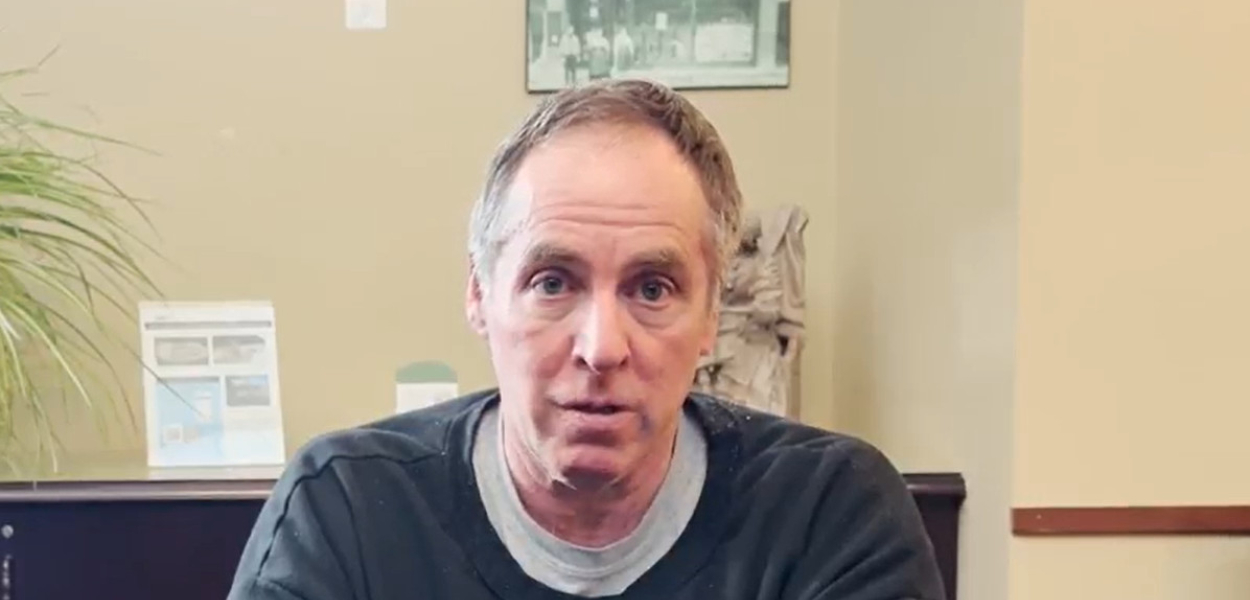
Otsego was a cesspool when I moved here in 1970. The river was brown, and where they have the ice rink and all that stuff up along the river, that was the city dump. There was just foam on the river. The steam looked like something out of Willy Wonka. The stacks were black and it smelled. You just think that's normal. It's not normal. No wonder it was killing people. I was six years old when we moved here. I didn't want to live here. Before I lived in the suburbs of Detroit, which were a lot cleaner. I mean, the Detroit suburbs were booming in the early 1970s.
We have to go back to 1970. That Renewed Earth compost site, south of the former Menasha Landfill, was a gravel pit. It's on River Street. We always called it ground zero. Menasha had a lot of waste, a lot of biosolids. So, in 1973 we had this energy crisis and they couldn't get any natural gas. Well, Menasha uses natural gas to evaporate their mother liquors. They use so much mother liquor per week making that paper. That’s condensed wood solids, sodium hydroxide, lignin, and other stuff. They could not evaporate it in those pits quickly enough because they didn't have any natural gas. They dug 22 ponds on this site, the 79 acres, and they just poured it into the ground. I'm talking thousands of gallons every three days, 10,000 gallons, whatever.
I played there as a ten-year-old kid, because our farm was next to it. So, no one can deny that I saw it. These brown sticky ponds, they just created them in sand. I remember they used a bulldozer. They dug a hole and then the trucks would come in and they would fill them.
“But it leached into the ground because if you keep putting it in, it's going down. It's going somewhere and it's not evaporating, it's going into the ground. That's how careless they were. Oh, it stunk. It smells like what I call death. It's nasty. It's got a sour-y smell. It smells like those aeration pits out there now by Otsego Paper.”
My dad wanted them to clean it up because it leaked into the back corner of our property. We had 80 acres in 1984. My dad got in an argument with the guy who was running it at the time. The guy said it's in the documents from the EPA that it would be an improvement to your property if we bulldoze some of that brush down. My dad was not a very pleasant man when he was irritated and I could see my dad turning red, wanting that cleaned up. He fenced it off so his cattle couldn't drink from the ponds of Menasha’s waste that appeared on our property.
“The problem is, the cattle grazed back there, they ate hay back there. And when it rains, it floods the land out there. Our cows kept having stillbirths and we couldn't explain it.”
In 1992 or ‘93, Renewed Earth mortgaged that 79-acre property. They were smart enough to say they weren’t responsible for the five-acre landfill. That whole site is contaminated. It's got PCBs, dioxins, arsenic from the coal waste from Menasha. They were worried it was going to be over the limit back then. “We'll just put it on the property line,” they said. That's what makes me so mad. You could have killed five members of my family. I'll never forgive them for putting my family at risk.
It was in Renewed Earth’s narrative years ago. I’ll paraphrase it: “We sell our compost to the Midwest. We sell in Indiana. Ohio. We have tour groups from Michigan State touting our product.” I knew at that time there was PFAS there. Did they tell their customers that the wells they used to make their products were old Menasha wells that pumped thousands of gallons of water out of the ground? And if that ground's contaminated with PFAS, you're going to pick it up in the well water and you're going to spread it. Then it kind of came out that there's no regulations for testing compost.
We tried to turn every stone that we could to prove what Menasha had done on that property. Any witness. Unfortunately, the guy that was running that dump back there died of cancer. Everybody that was related to the site seemed to die of cancer, and nobody from Menasha would talk. I tried to get my aunt to talk, and she wouldn't talk. She died of cancer. I want justice for anybody that had cancer along Hill Road. I knew a lot of them that died. I could tell you what kind of cancer they had. People will say you just want money. I don’t want compensation. My brother, he's got financial damages from this. I'm not in it for the money. I want the story told.
Do you know why the city wells are now in Brookside Park? The city's wells used to be on Menasha’s property. In 1973, Menasha developed a contamination problem in the aquafer it used for its water and the city’s. It was caused by the sugar in their wood chips, which would leach into the groundwater from the sludge ponds. Their mother liquors had sugar in them, and that fed the bacteria that was clogging up the pipes and everything there.
“In February 1974, Menasha paid the Calgon corporation to begin a treatment program for the bacteria problem. They started using Calgon H-130 in the aquifer. Then they started using H-204—a microbiocide that included tributyltin oxide. Tributyltin is a biocide—it kills life. It’s also an endocrine disruptor and is banned by the UN. It is nasty. It scrambles mitochondria. You wouldn't want to allow it near a water source.”
In Alaska, they were putting it in paint to kill the barnacles on ships, and it was wiping out the fishing industry in Cook Inlet. Menasha used the tributyltin to kill the bacteria and then pumped the aquifer clean through the plant into the Kalamazoo River.
The city wells were over there in 1973 north of town on Menasha’s property. Sam Dowdy noticed the water getting brown in the wells. He was a superintendent of Otsego Public Works for years. The next year, they put those wells in City Park in 1974, and they also had to run water out to six houses on Hill Road, which is technically outside of the City of Otsego. Those wells were contaminated. They were only 30 feet deep, and they were getting brown water.
Here's the other part of the story. I was looking at the well logs for those sections, and I kept noticing that people had to replace the wells out there, two miles down the road. There was a span of 15 years that about 20 wells had to be replaced out there, probably because of brown water. There's a clay cap that separates the aquifer from the surface water. Those wells were extremely shallow out there. Those people weren't very rich. Back in the day, you had a 30- or 40-foot well, and it probably was built in the 1940s. I thought, “Well, that's really weird that many wells had to be replaced.”
When I called the DEQ at the time, they're like, “Well, why is that significant right now?” I said, “It's 120 feet up to where that PFAS goes down to Hill Road. It's a huge hill. It's a massive hill. It's going to roll like a bowling ball, and it's going to go across the highway under Plainwell airport into those subdivisions over there. Do you want to test their wells on Sycamore Avenue?” But it's like a brick wall with those guys. Sometimes you had to yell. You had to get mean. That Flint water crisis was going on. I said, “You guys can be the next ones that go. I won't stop until I see some of you indicted because you're stonewalling and you're not admitting to what was going on out there.” Every time you turned a page, there was another incident that started to make sense.
During COVID, everything shut down. You can't just walk into the DEQ anymore. You used to be able to walk in and say: “I want to see Ray Spaulding.” You can't do that anymore. We hunkered down and, at the end, there was no media exposure anymore. The story had lost to COVID. We were a hot one with the pollution thing and Mary’s activism. That was a hot topic every week on the news. If COVID hadn’t hit, we would have done a lot more investigation.
What does Justice for Otsego look like?
I want it cleaned up. And I want people involved, especially those who might have acted nefariously, to be obligated to give testimony. Because your companies could be liable. Now they'll say the statute of limitations ran out, but it's still got to be cleaned up. You can't have forever chemicals in the ground here. You're going to kill people 60 years from now that built a house. I want those identified. At least identify the hot zones.
What does “Justice for Otsego” mean?
Gallery
Related Stories
-

I lived at Ground Zero. No one lived closer to those pits and that contamination than I did, and there were so many different exposures in my life. Who's to say what was going to become of it?
-

At first, there was some doubt, with people saying that everyone gets cancer. But I said, 'No, everybody does not get cancer, and they definitely don’t get it in their teens, 20s, and 30s.'
-
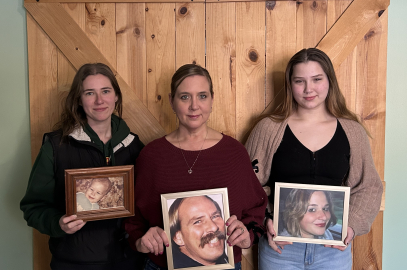
I had always known something environmentally was wrong, but I didn’t know what it was. There were way too many kids with autoimmune disorders and people with rare cancers.