
Susan Morrison
Grew up in Otsego
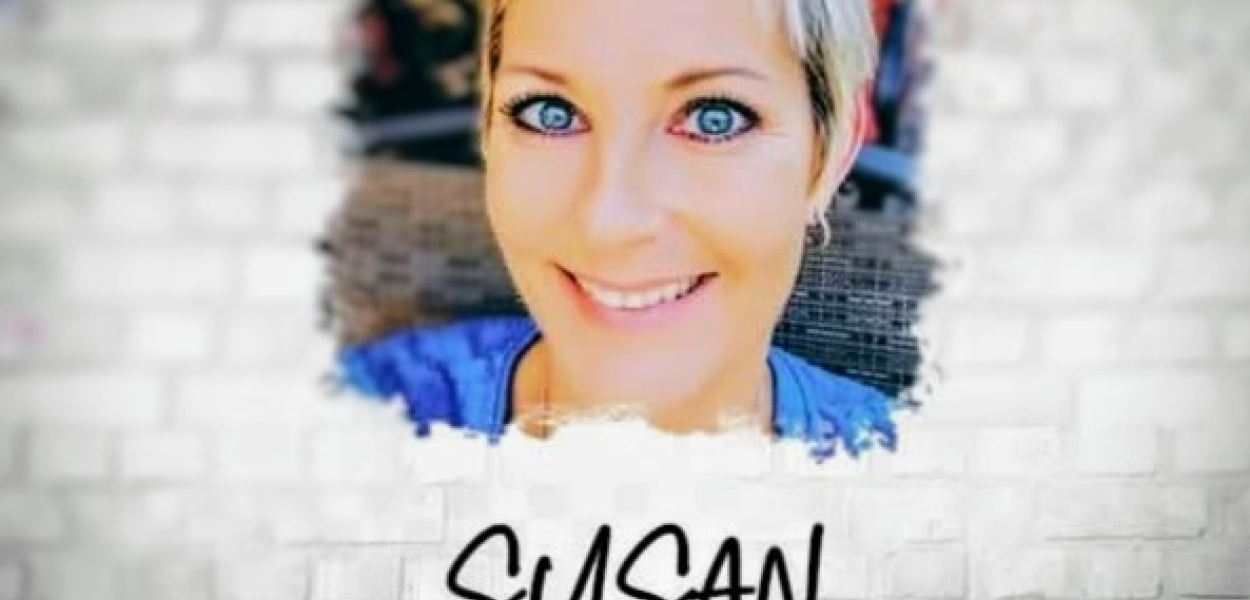
“I'm 52 years old, and I've been a patient of the University of Chicago pretty much nonstop for well over a decade now for very unusual systemic illnesses that don't have any genetic root cause to them, and it's wrecked my life.”
I remember Mary Zack getting sick the first time when she was really young, and we all thought it was really weird. Then at my five-year class reunion I realized that, and I hate to use the term, but it seemed like people were dropping like flies from not-normal diseases for their age or disease progression that was very aggressive. Within my graduating class alone, which would have been the class of 1991, I think that we are up to something like eight or ten people who have all died from early-onset or very unusual diseases, on top of my own personal health journey.
My siblings and I had always been somewhat poorly when we were young, with chronic infections and infections that we just could not get over: constant strep throat, weird GI bugs, chronic ear infections with no real rhyme or reason. Then, for me, what really seemed to tip it over was I got mono in about sixth or seventh grade when I was 13 and I was bedridden sick for a good eight weeks. Back in those days when you didn't get over mono, they didn't talk about myalgic encephalomyelitis, they didn't talk about recurrent Epstein-Barr virus. That was referred to as “the yuppy flu.”
My sister and I both had very strange reproductive health issues when we became menstrual age. We both suffered from profound infertility without any kind of family history. At 35, I had to undergo a radical hysterectomy and had heavily invasive, stage four endometriosis all the way up to the thoracic region, an adenomyosis that was incredibly, incredibly aggressive. I actually had to go through a full hysterectomy revision this past December, and the revision that they did was about 5 hours' worth of surgery, stage four again. My bladder had nearly been completely strangulated. I'd managed to develop a Brenner tumor, which from a gynecological perspective, happens in about less than 3 percent of people.
We've all had very strange thyroid issues. My sister and mother have developed parathyroid issues, which is not common to run in families at all, it's usually a one-off type of thing.
In 2021, they discovered that I had an almost tennis ball–size adrenal tumor that initially they thought was a pheochromocytoma because there was hormonal signature to it. When they got in and found it, it was actually a very aggressive pseudo-pheo that was centrally hemorrhagic and had attached to multiple other things inside. I've since developed hypophysitis and a functional pituitary lesion. I’ve developed migraine headaches and some Parkinsonian syndromes without any family history. My younger brother has developed idiopathic thrombocythemia. We have no history of blood disorders in our family at all. Oddly enough, as an adult, he went to go work in the paper industry, and they actually think it was chemical exposure that triggered that.
It's been a lot. I've had seven major surgeries in the past six years. I have nearly died twice.
Thankfully, everything so far for me has been benign and not cancerous. When things were decent, I used to be really active. I mean, I used to run, dance class, soccer, tennis, horseback riding. I grew up on a recreational farm. When whatever decided that it was going to go bad went bad, it went really bad. A little over a year ago, my body just absolutely went into the point of failure to where I'm now having to deal with maneuvering through Social Security disability. I can't work. This isn't genetic. I wasn't born this way. Something happened.
We used to go for science field trips down to the Kalamazoo River when I was a kid. The river was so polluted from this that you couldn't eat the fish. I remember seeing frogs that were deformed hopping around all over the place, and fish that weren't right. I can remember a couple years when literally all the fish died. And it stunk. I mean, I can't even begin to tell you between paper mills’ stink and rotten fish stink everywhere. That's how the well water got fed. Not to mention how many people's parents worked at the paper mills and came home with that stuff on their clothes, on their shoes. I can't even describe the smell when I was a kid.
When we'd go on science field trips, it wasn't to look at how polluted the river was. They kind of taught us about pollution, but pollution, when we got taught about it, was more like people throwing trash into the river; it wasn’t about chemical runoff or fertilizer runoff. When I got a little older, especially surrounded by the Great Lakes, I can remember when we couldn't eat Great Lakes fish because the mercury content was too high. So, we understood stuff like that, but that wasn't our problem.
“That was stuff that Chicago had done. That was stuff that Detroit had done. It wasn't what all the paper mills had done.”
Newcomers, the people who came from the outside who don't remember what it was like then, they don't have any concept of it because the laws are different now. There's paper manufacturing in Otsego again, but EPA standards are completely and totally different, so they don't smell it. They're on city water now that's all filtered, it's all chemically treated. For them, I think it’s, “Oh, well, that used to happen back then.” They don't see the ramifications of what's happening to all of us now that grew up that way.
I know that early on in the studies that there were anonymous spreadsheets of people that lived in Otsego that tracked whether you're male or female, this is your age, these are all the things that you had going on, and I started literally bawling looking through it because I realized we're all the same, but we're all a little different. There's entire streets and blocks of people who have lived there and everybody's sick? In some kind of way? That's not normal. It's not normal.
Do you know how many people in my graduating class suffered from profound infertility? Straight up could not have kids. It wouldn't have mattered if they did all the IVF in the world. It's a lot. That's not normal. The number of early onset ovarian cancer, adrenal cancer, other endocrine cancers? Liver cancer in young people? Pancreatic cancer in young people? Kidney cancer in young people? Not normal.
I don't think that there is enough human side to this. I think people see a lot of things that are written down on paper and don't realize that there are humans that have to live with the aftermath of this. There are families who have been devastated by this. I don't think unless people put themselves out there that anything's ever going to be different. I hate to bring any kind of political twist into the mix, but seeing some of the push to start allowing some of these chemicals to be used again when there's data there that shows that it's dangerous? I just can't.
Now, they're talking about building low-income housing in Plainwell on what they know is a contaminated site where there used to be a paper mill. They can dig all the dirt out of there that they want. That pollution doesn't go away, so that means that more generations are going to suffer mysteriously and silently unless people get brave and stand up. I think it takes people who are having to live with the ramifications of what has happened being brave enough to say, “This happened. And it's still happening. And we don't know how much more this is going to happen in the future. And if we don't start, right now, breaking the cycle of habits, is it ever going to stop?”
What would justice for Otsego look like to you?
I don't even know how to answer that. I really don't. I mean, you can't bring back the people that we've lost. Yeah, it'd be nice for those of us that are still here to recoup hundreds of millions of dollars in doctor’s bills, but that doesn't do anything for what our futures hold for us. How much more is that going to cost? I don't even know what it would look like. I just know a lot of people have been hurt, are still hurting. How much more is the future going to hurt for people?
I just feel like some of these big corporations are just going to keep hiding the dirty stuff that they do, just repackage it in a different way. You can try to put companies out of business, but they're just going to come back under a different name. I don't know if there is any way that they could ever make it right. How do you quantify it?
I'm mad about my health. I know what it's taken away from me. I'm not even the sickest of the bunch. I guess what makes me mad is just the continual nonacknowledgement of any wrongdoing. This continued narrative that what they've done has somehow untainted all of this. “Well, we've untainted everything.” No. No, you haven't. There is no untainting. And you know it. So, just stop with the crap.
What does “Justice for Otsego” mean?
Related Stories
-
It doesn't sit right with me that my daughters are going through this. It's really hard to be so helpless. My daughter wants answers, and I don't have any.
-
I remember when we moved here the town was called "Otstinko" because of the paper mills and the meat packing plant in Plainwell; the smell would blow our way depending on the weather.
-
I lived at Ground Zero. No one lived closer to those pits and that contamination than I did, and there were so many different exposures in my life. Who's to say what was going to become of it?